





What is Prospecting?
At its most basic, prospecting is the process of finding and linking potential customers who may have a potential need for your product or service. It relates to pinpointing businesses that best fit your ICP and starting communication that leads to establishing a relationship which would eventually lead to a sale. The steps involved in prospecting are-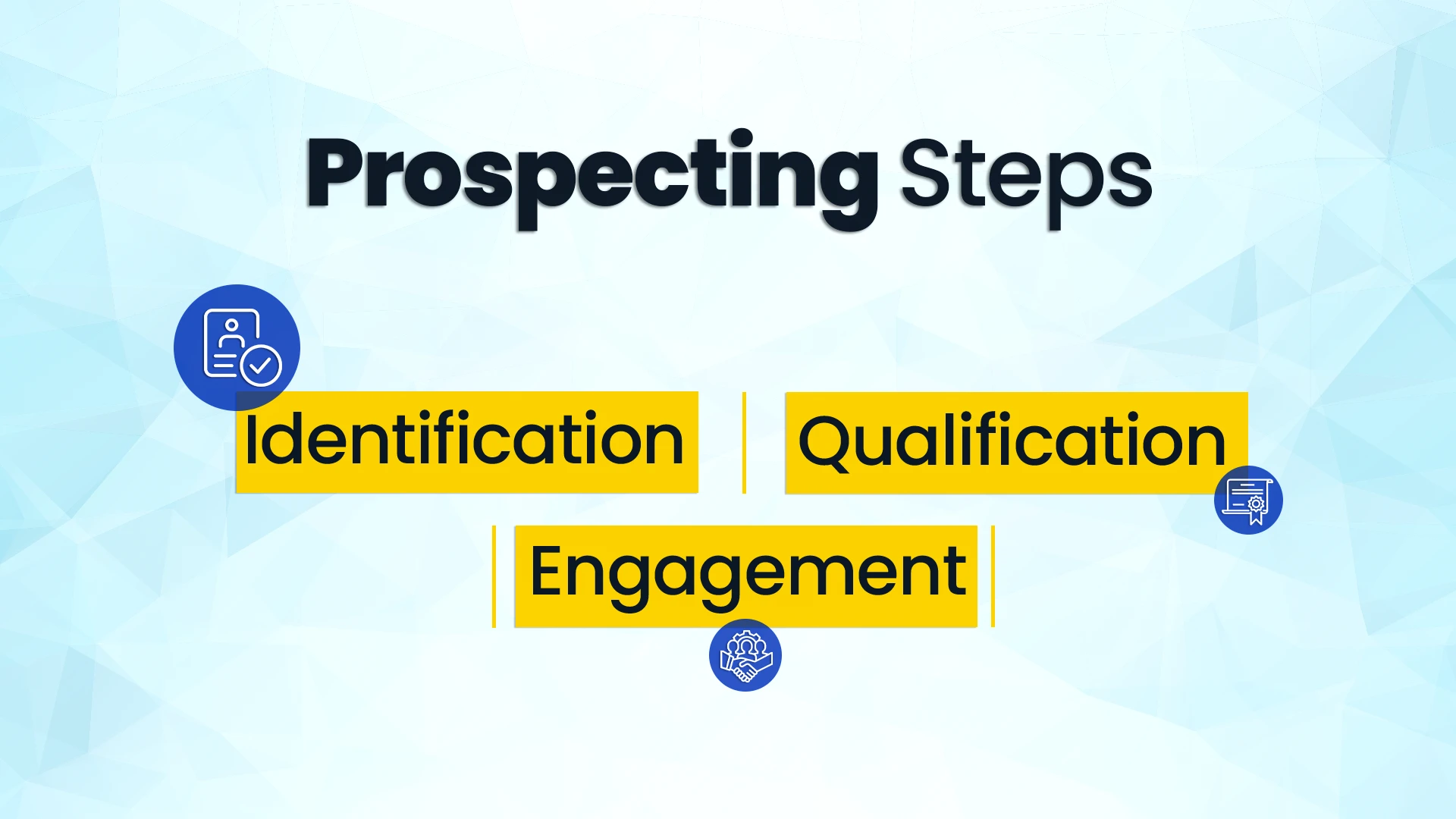
- Identification: Businesses or decision-makers that match your ideal customer profile.
- Qualification: Evaluating leads based on specific criteria to determine if they are a good fit.
- Engagement: Crafting and delivering personalized communication to generate interest.
What is B2B Prospecting?
B2B prospecting refers to finding a potential client within a business-to-business sales cycle. While B2C prospecting targets mostly the consumer, B2B prospecting focuses more on identifying potential customers from organizations and gradually nurturing them for a business-to-business partnership.Characteristics of B2B Prospecting:
- Long sales cycles: The deals take their time because they are complex and worth a lot.
- Multiple stakeholders: Involving the concerned organization will meet the needs of several decision-makers of the concerned organization.
- Value-based communications: Communications that are targeted and personalized to solve business problems.
What are the Top B2B Prospecting Methods?
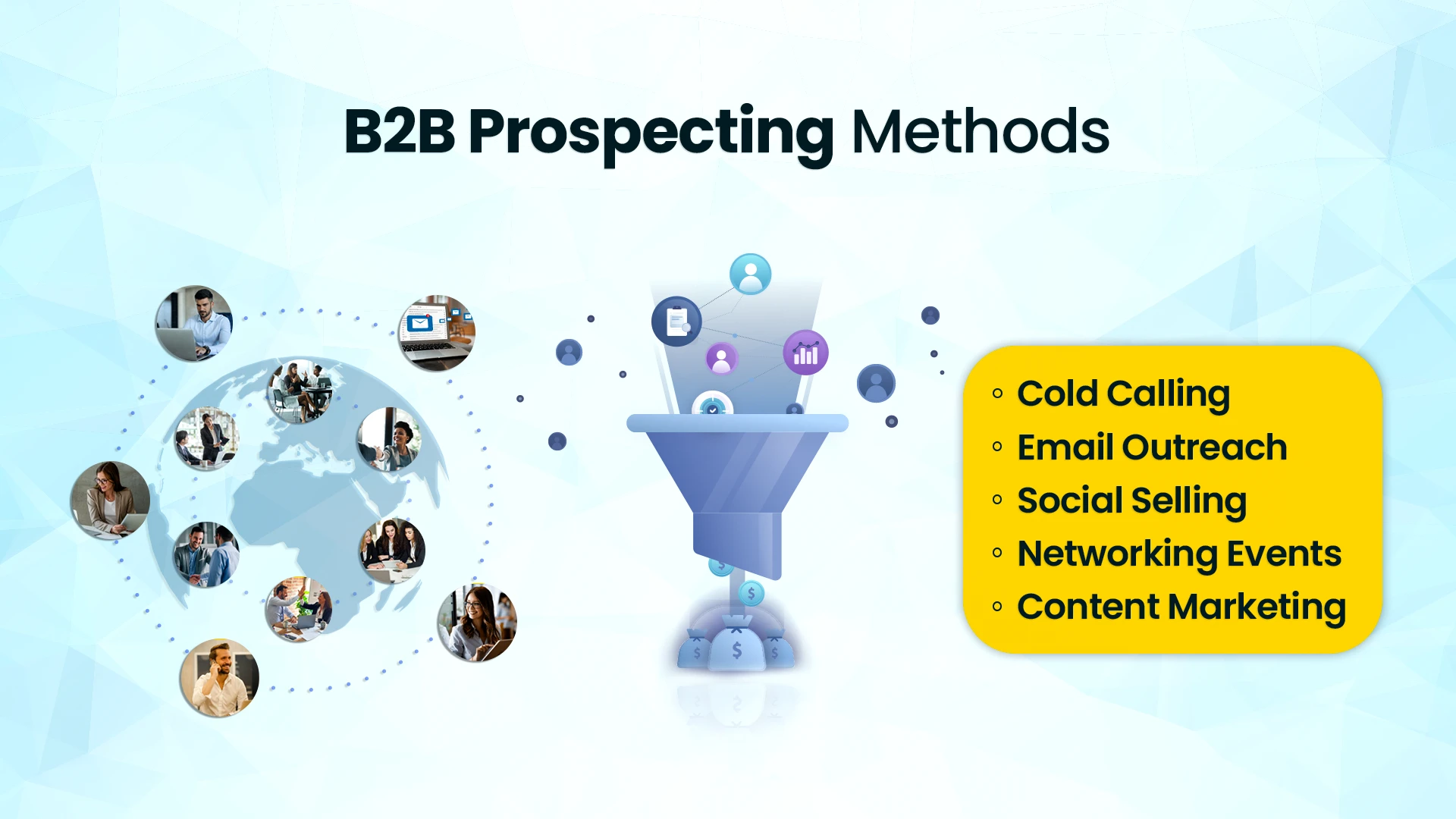 B2B prospecting requires a mix of old, new, and innovative techniques. Amongst the best methods of B2B prospecting are:
- Cold Calling: One of the oldest methods, where calls are placed directly to prospective clients. Although its effectiveness has declined over time, a well-researched script and precise targeting can still yield excellent results.
- Email Outreach: Email remains one of the most cost-effective ways to reach prospects. For success, it must include personalization and a compelling value proposition.
- Social Selling: Engaging with prospects in a non-intrusive manner by leveraging platforms like LinkedIn to build credibility through sales representatives.
- Networking Events: Attending industry conferences, trade shows, and webinars to connect with potential decision-makers and establish authority.
- Content Marketing: Creating high-quality content such as whitepapers, case studies, and blogs to attract prospects and position the brand as a thought leader.
What is Prospecting in Sales?
Sales Prospecting is the process through which sales firms determine, look for, and seek contact opportunities for the actualization of new prospects to customers concerning the company's product or services. It means the top step in the sales pipeline applicable to business development. Without adequate plans for prospects, poor leads could come about within a sales team along with low conversions.Important Things to Know About Sales Prospecting:
- Ideal Customer Profiles (ICP): These are the characteristics and features of the ideal customer, including their company, industry, firm size, decision-makers involved, and possible pain points they may face.
- Prospect Research: Gather contact and company data from trusted B2B data providers like Avention Media to enable high-level prospecting.
- Choose the Right Channel: Market products and services to prospects who are ideal for your business across channels where they are most active.
- Lead Qualification: Use BANT (Budget, Authority, Need, Timeline) or CHAMP (Challenges, Authority, Money, Prioritization) to qualify whether a prospect is a good fit for the business.
Examples of Sales Prospecting
To explain further how sales prospecting works across different industries, here are some examples: Example 1 : SaaS Sales Prospecting via LinkedIn Company: A cloud-based HR software provider Target Audience: HR managers and talent acquisition leaders in mid-sized companies Prospecting Method:- Personalized Connection Request: Send a connection request with a short note explaining how a specific pain point can be addressed together.
- Include a Case Study: Share a case study showcasing how other HR teams increased productivity using the software.
- Schedule a Demo Call: Arrange a demo call with interested prospects to present the solution in detail.
- Source a list of prospects from a reliable database provider such as Avention Media.
- Run an email campaign on the latest cyber threats in banking.
- Attach a CTA to book a free security audit.
- Follow up with those who engage with the content of the email.
- Identify the companies whose IT infrastructures have aged out.
- Reach out to the decision-makers whose pain points are already in play.
- Offer a free IT audit to initiate the conversation.
- Move the leads through the sales pipeline.
- Video pitch for high-value accounts.
- Mail-packs with unique propositions.
- Message sending on LinkedIn and email campaigns.
- Meet the CMO to present custom marketing plans.
What is Prospecting in Marketing?
While sales prospecting involves reaching out to people, marketing prospecting means creating incoming leads through targeted marketing activities. This type of marketing helps to nurture future customers as it increases the visibility and engagement of the brand.Major Difference Between Sales and Marketing Prospecting
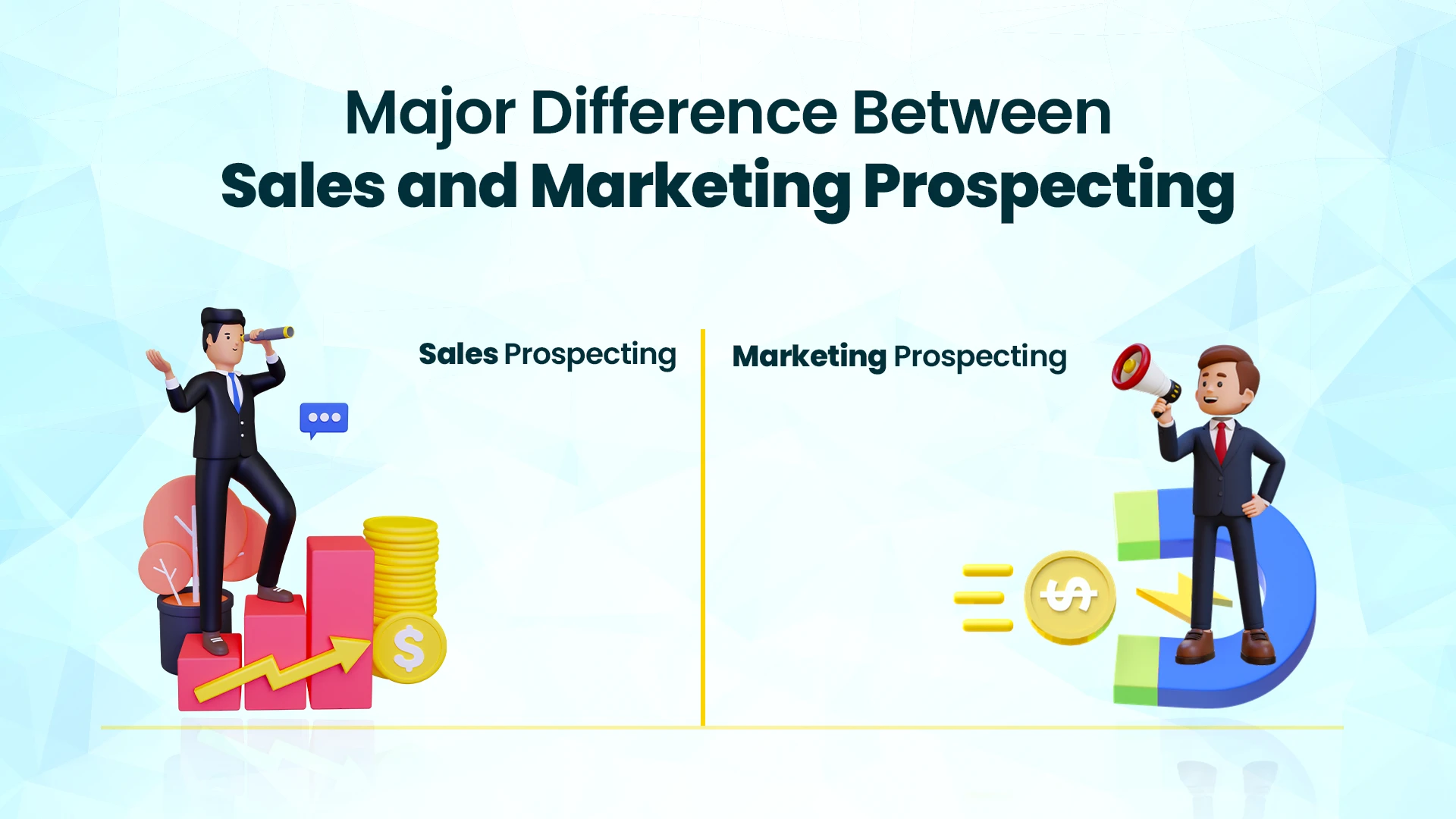
| Aspect | Sales Prospecting | Marketing Prospecting |
| Goal | Direct engagement with potential buyers. | Attracting leads through content and campaigns. |
| Method | Cold calling, emailing, LinkedIn outreach. | SEO, PPC ads, social media, content marketing. |
| Lead Qualification | Manual qualification (BANT, CHAMP). | Automated lead scoring, CRM-based qualification. |
| Timeframe | Short-term, direct interaction. | Long-term, nurture potential buyers over time. |
What are the Best Marketing Prospecting Tactics?
1. Content Marketing- Blog and whitepaper development
- Case studies
- Industry reports and other related forms with the hope of attracting leads.
- The creation of the content in a manner that improves the ranking with the key phrase for the B2B industry.
- Cybersecurity companies may make sure the website is optimized for ranking by "best data protection solutions for enterprises".
The Top B2B Prospecting Tools To Boost Lead Generation
B2B prospecting is changing with the improvement of technology to make the process more efficient and effective. 80% of sales involve at least five follow-ups, but 44% of salespeople give up after just one attempt (InsideSales). Hence, this calls for structured prospecting and utilization of B2B prospecting tools to better the outreach, engagement, and conversion rates. B2B prospecting tools automate and streamline the prospecting effort. The marketing and sales teams can:- Identify quality lead.
- Configure automated LinkedIn email contact.
- Monitor the communication and engagement done on the lead's side.
- Enhance conversion percentages by fetching data information.
- Salesforce: The most used CRM, powered by AI-based lead scoring.
- HubSpot CRM: A CRM ideal for small and medium-sized businesses, with built-in email automation.
- Zoho CRM: The most low-cost CRM with the best automation and AI-based insights.
- Mailchimp: This tool is great for email marketing and bulk outreach.
- Outreach.io: Automated AI for personalized email sequences.
- Lemlist: Assists in making images and dynamic text in email outreach.
- LinkedIn Sales Navigator: Enables advanced search filters to find decision-makers.
- Dux-Soup: Automates the visits of LinkedIn profiles and sends out connection requests.
- Expandi: AI-powered LinkedIn outreach and messaging automation.
- Avention Media: Deep B2B contact database with company information.
- Lusha: Chrome extension for scraping contacts from LinkedIn.
- TargetNXT: Data enrichment for B2B prospecting.
- SalesLoft: AI-driven call and email tracking for sales teams.
- Apollo.io: Combines features of prospecting, email outreach, and CRM.
- VanillaSoft: Best suited for inside sales teams who are dealing with high-volume outreach.
- Chili Piper: AI-driven scheduling and lead qualification.
- LeadIQ: Leads capturing and qualifying automation.
- Drift: AI chatbots for B2B lead engagement.
What are the 5 P's of prospecting?
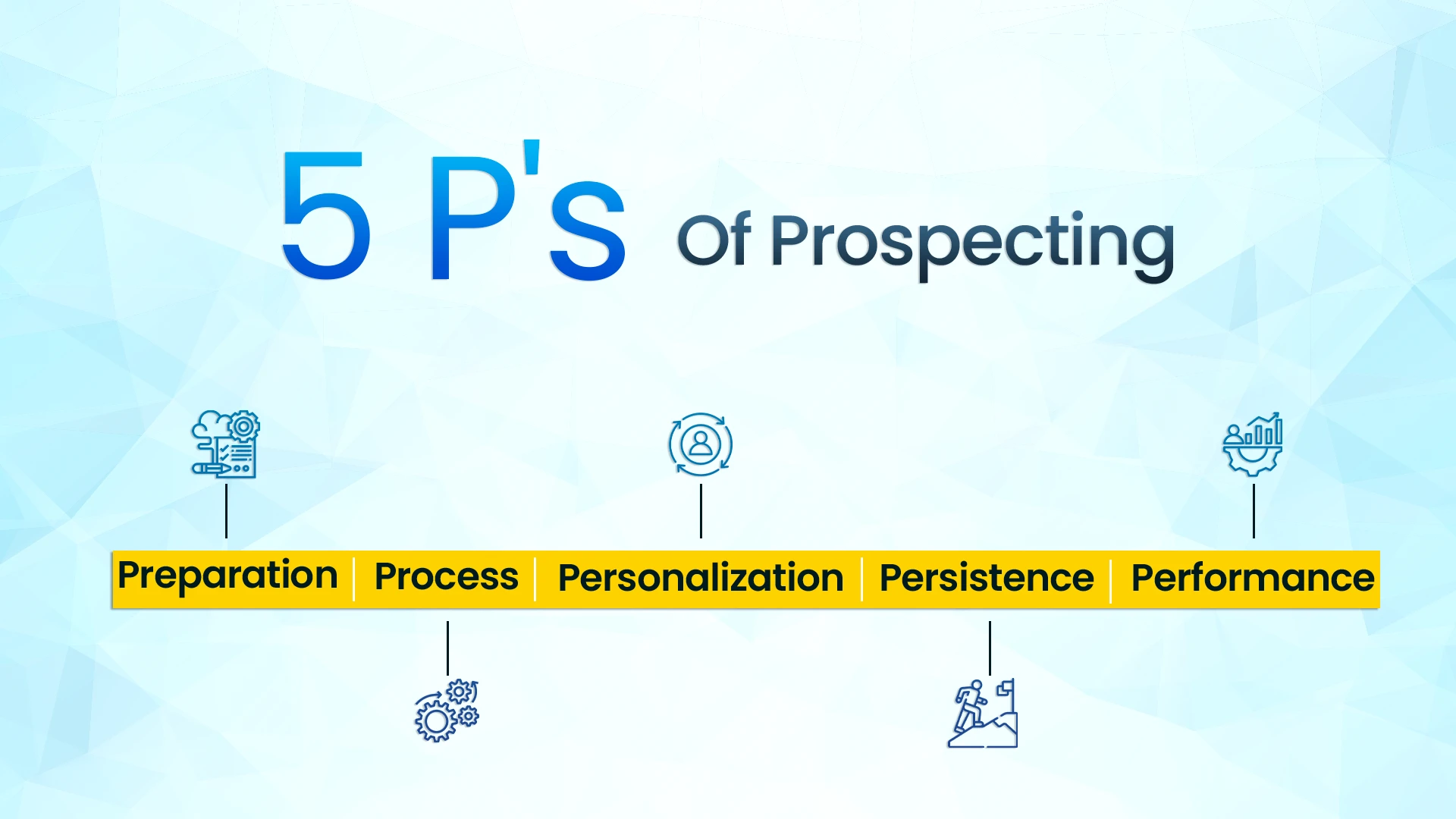 The 5 P's of prospecting help sales teams approach B2B sales in a structured and effective manner.
-
- Preparation
- Process
- Personalization
- Persistence
- Performance
- Email open rates and reply rates
- LinkedIn connection acceptance rates
- Call-to-meeting conversion rate
| Aspect | Prospects | Leads |
| Definition | The process of identifying and reaching out to potential customers who fit your ideal buyer profile. | Individuals or businesses that have expressed interest in your product or service but are not necessarily qualified as prospects yet. |
| Approach | Proactive—sales teams actively seek potential buyers through cold calling, email outreach, social selling, and networking. | Reactive—leads are generated through marketing efforts like website sign-ups, content downloads, PPC campaigns, or event participation. |
| Stages in Sales Funnel | Early-stage—focused on finding and engaging decision-makers. | Middle-stage—leads have entered the funnel and require nurturing to become sales-ready. |
| Qualification | Prospects are researched and identified as fitting the target customer criteria before outreach. | Leads may or may not be qualified; they need further assessment to determine their sales potential. |
| Conversion Rate | Lower—prospects require nurturing before becoming sales opportunities. | Higher—qualified leads are more likely to convert into customers. |
| Examples | A sales team finds a list of 500 finance directors in mid-sized tech companies and reaches out with personalized emails. | A company downloads an eBook on "AI in Finance" from a SaaS company’s website and enters its CRM system as a lead. |
What are the Challenges of B2B Prospecting?
Despite its importance, B2B prospecting presents several challenges that a sales team must navigate to keep the pipeline performing at its best. The challenges of B2B prospecting are: 1. Failure to Reach Decision-Makers Stat: Only 10% of buyers are actively able to reach the decision-makers at any given time. Problem: Multiple stakeholders in B2B sales influence the buying decision. Gatekeepers (assistants, lower-level managers) filter communications, which makes direct outreach difficult. Solution: 2. Low Rate of Response to Cold Outreach- Use LinkedIn Sales Navigator to find the right contact.
- Personalize cold emails and calls with industry specifics to avoid gatekeepers.
- Build an ABM plan for a campaign aimed at targeting a set of decision-makers in one organization.
- Test different email subject lines and personalization techniques
- Use a multi-channel approach—cold emails, LinkedIn outreach, and follow-up calls
- Use AI-driven email automation tools like Outreach.io to optimize send times and improve engagement
- Obtain a verified and authentic contact database from Avention Media to get accurate contact information of prospects.
- Use a CRM system, like Salesforce or HubSpot, to categorize and track prospects effectively
- Keep the prospecting lists updated and clean to ensure accuracy.
- Give value through personalized content—case studies, whitepapers, and webinars.
- Schedule strategic follow-ups to keep top-of-mind without nagging the prospect.
- Teach sales teams how to deal with objections in a confident yet empathetic way.
- Gamification of sales prospecting to keep them engaged
- Data-driven measurement of small wins and improvement strategies.
- Define KPIs such as conversion rates, response rates, and sales velocity
- Use analytics within CRM platforms that track performance.
- Continuously optimize prospecting campaigns based on data insights.